
Is a Dog Treat Subscription Box Worth It? Here's What 6 Months Taught Me
An honest six-month review of dog treat subscription boxes: what works, what doesn't, and how to evaluate one before committing.
In this article
- 01Key Takeaways
- 02The Obvious Pitch Is Convenience — But That's Not the Real Value
- 03How Do You Evaluate a Subscription Box Before Committing?
- 04What Actually Happened Over Six Months
- 05What Are the Honest Tradeoffs?
- 06Does Ingredient Quality Actually Vary Between Boxes?
- 07Is a Dog Treat Subscription Box Worth It?
- 08Frequently Asked Questions
- 09The Bottom Line
- 10Sources
Is a Dog Treat Subscription Box Worth It? Here's What 6 Months Taught Me
Key Takeaways
- Dogs get used to repeated treats quickly, reducing their motivational value for training — variety resets that response and keeps rewards effective
- A subscription box priced at $40/month should deliver at least $50–60 in comparable retail value; anything less and the math doesn't justify the markup
- The best boxes adjust treat size, hardness, and caloric density by breed size — a treat sized for a 90-lb Lab can be a choking hazard for a 10-lb dog
- After six months, a well-curated subscription teaches you more about your dog's actual preferences than years of buying the same 2–3 store brands
- Theme-based curation (flavor profiles, cultural influences, seasonal occasions) produces more training-useful boxes than random grab-bag assortments
The Obvious Pitch Is Convenience — But That's Not the Real Value

Convenience is real. Treats arriving automatically without a mental calendar reminder is genuinely useful. But after six months with a dog treat subscription box, the bigger payoff turned out to be something most subscription marketers don't lead with: variety as a behavioral and training tool.
Dogs adapt fast. A treat your dog goes wild for in week one becomes furniture by week six if it's the only thing in the rotation. The novelty wears off, the motivational pull drops, and suddenly your high-value reward is getting sniffed and walked away from during a recall training session.
Key StatAccording to a 2020 study published in Applied Animal Behaviour Science, dogs show measurably reduced engagement with familiar stimuli compared to novel ones — a finding directly relevant to treat-based training effectiveness.
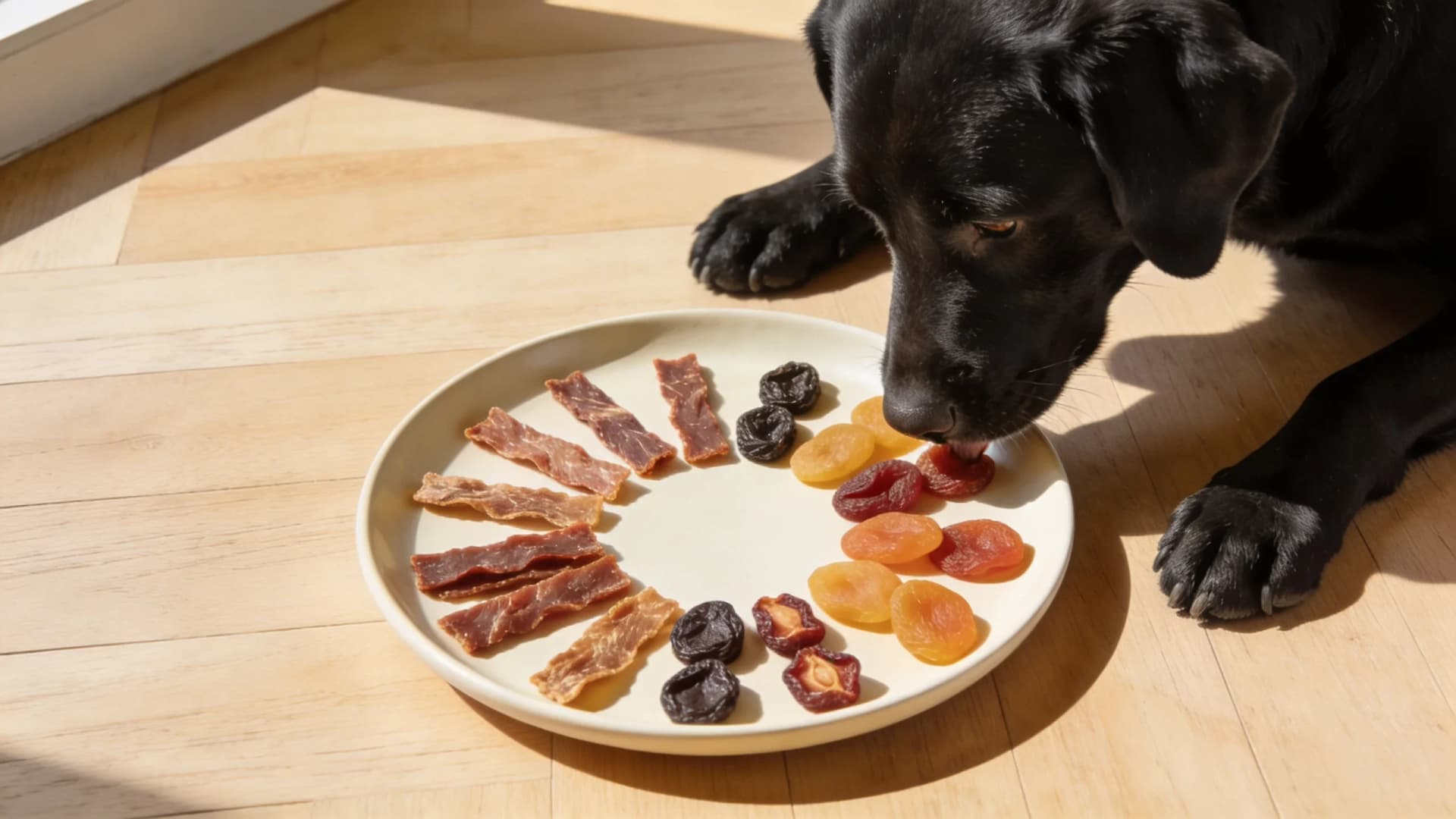
A subscription that cycles new textures, protein sources, and treat formats monthly keeps that novelty working in your favor. The second benefit is discovery — most owners rotate through 2–3 brands they found at a pet store and never expand beyond that radius. A subscription pushes you outside it. That's where you find the treats your dog will actually work hard for.
How Do You Evaluate a Subscription Box Before Committing?

Not all boxes are built the same. Before subscribing, run any candidate through this framework:
Ingredient Transparency
The minimum standard is a full ingredient list for every product in the box. Vague labels like "natural flavor" are red flags. Better boxes tell you the protein source by country of origin, distinguish single-ingredient from multi-ingredient treats, and flag the top allergens clearly — wheat, dairy, chicken, fish — without you having to dig for it.
Curation Philosophy
There's a meaningful difference between a box that fills itself with whatever inventory is available and one built around a clear theme. A Korean BBQ–themed month, for example, gives you bulgogi-style beef jerky, sweet potato accompaniments, and savory chews that work together across a training session. A random grab-bag of disconnected treats doesn't build that way.
Size and Breed Appropriateness
A box that sends identical contents to a 5-lb Chihuahua and a 90-lb Labrador isn't personalized — it's just automated. Treat size affects safety (choking hazard risk), training utility (small treats are better for repetition-heavy sessions; large chews are better for enrichment), and caloric load.
Value Relative to Retail
Calculate cost-per-ounce against buying equivalent treats individually. The table below shows how to run that comparison:
| Box Price | Minimum Retail Value Needed | Break-Even Threshold |
|---|---|---|
| $30/month | $37–45 | $30 |
| $40/month | $50–60 | $40 |
| $55/month | $68–82 | $55 |
If the box delivers less retail value than its subscription price, the math doesn't work — regardless of how convenient it is.
What Actually Happened Over Six Months
This isn't a hypothetical framework. Here's the month-by-month reality:
Month 1: Three formats my dog had never encountered. She was skeptical of two and enthusiastic about one. Useful data — not a failure.
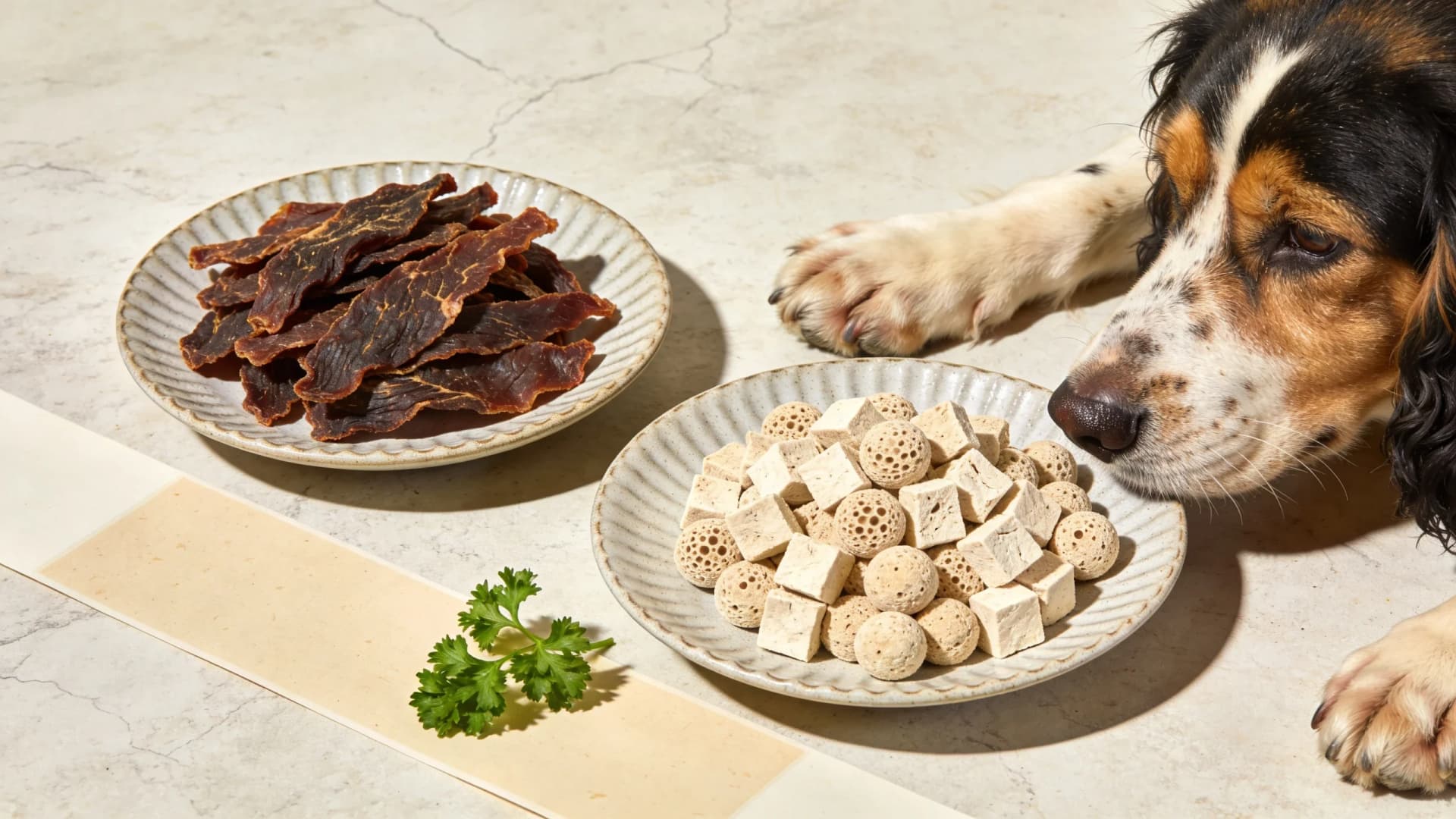
Month 2: A Korean BBQ–themed box. Bulgogi-style beef jerky strips were an immediate hit. In Korea, beef is a deeply embedded part of food culture, and the savory-sweet flavor profile translates well to dogs. The sweet potato puffs — goguma is a Korean staple, roasted and eaten as everyday snacks — were accepted but not loved.
Month 3: A comfort-themed box with soft chews and mild-flavored puffs. Less exciting, but practically useful during a week when my dog had a mild stomach upset and needed lower-stimulation, gentle treats.
Month 4: Fish skin chews. My dog had never shown enthusiasm for fish. She became obsessed. I never would have tried these on my own.
Month 5: A ramen-inspired box with noodle-shaped rice chews and dried chicken strips. She spent ten minutes investigating the rice chews before committing to eating one — the highest engagement I'd seen with any new treat format.
Month 6: I had enough preference data to adjust the quiz determining her box. The result was the most precisely calibrated box of the six — the subscription had essentially taught me my own dog's palate.
Key StatBy month six, my dog's treat preference profile was specific enough to eliminate roughly 40% of the treat formats she'd been indifferent to — narrowing the box to higher-value options only.
What Are the Honest Tradeoffs?
Every subscription model has limits. Here's where dog treat boxes work well and where they don't:
| Category | Works Well | Works Less Well |
|---|---|---|
| Discovery | Excellent — exposes you to formats you'd never buy independently | Requires patience; month 1 is often trial-and-error |
| Variety for training | High value — novelty maintains motivational pull | Less useful if your dog has a very narrow preference range |
| Allergen management | Manageable with good upfront disclosure | Requires active monitoring; convenience disappears if you're regularly pulling treats |
| Cost efficiency | Strong if box-to-retail value ratio exceeds 1.25x | Weak if you're price-sensitive and willing to do your own sourcing research |
| Breed/size fit | Excellent with personalized boxes | Inconsistent with one-size-fits-all models |
The cost consideration is worth stating plainly: you're paying a curation premium. If you're willing to research, source, and rotate treats yourself, you can probably replicate the variety at lower cost. The subscription is paying someone else to do that work — and to occasionally find something you'd never have found on your own.
Does Ingredient Quality Actually Vary Between Boxes?
Yes, significantly. The difference between a thoughtfully sourced treat box and a bulk-discount assortment shows up in three places:
Protein sourcing: Single-ingredient treats — one protein, nothing else — are the clearest signal of quality. A dried sweet potato chew with one ingredient is a different product than a "sweet potato treat" with glycerin, salt, and artificial flavoring added. Glycerin is a cheap moisture-retaining additive that extends shelf life, and dogs simply don't need it.
Key StatSingle-ingredient treats are the clearest quality signal in any box. If the ingredient list has more than a handful of items, ask why — the answer usually points to cost-cutting rather than nutrition.
Protein percentage: High-quality meat-based treats typically run 75–90% crude protein on a dry matter basis. Treats padded with fillers drop below 60%. When a box lists protein percentages per treat, that transparency is a positive signal.
Country of origin: This matters. Chicken treats manufactured in the U.S., South Korea, or New Zealand operate under meaningfully different quality oversight than treats with unspecified or obscured origins. FDA import alerts on pet treats have historically concentrated around specific sourcing regions — knowing where your treats come from is basic due diligence.
Key StatWhen a box clearly lists country of origin for every treat, that transparency alone is a meaningful quality signal — it means the company is confident enough in its sourcing to show its work.
Is a Dog Treat Subscription Box Worth It?
For most dog owners: yes — with conditions.
The conditions are: you provide accurate upfront information (size, breed, known sensitivities, existing preferences), and you choose a box built on genuine curation rather than inventory convenience. Given those two factors, a well-designed subscription box will tell you more about your dog's actual palate in six months than years of buying the same treats from the same store shelf.
The treats become a relationship tool. You learn what your dog works hard for in training, what they'll eat even when distracted, what they find boring, and what makes them investigate for ten minutes before committing. That preference map is genuinely useful — for training, for enrichment, and for the ongoing project of knowing your dog.
Key StatThe subscription box isn't really a treat delivery service. It's a structured way to learn what your dog actually values — and that information is worth more than any individual treat in the box.
Frequently Asked Questions
The Bottom Line
A dog treat subscription box is worth it when it's built on real curation, ingredient transparency, and genuine personalization by breed size and dietary needs — and when you give it enough months to actually learn your dog. The convenience is secondary; the preference data you accumulate is the real product.
Ready to find out what your dog actually loves? Take the treat quiz to build a box around your dog's specific size, protein preferences, and taste profile — or browse the store to start building your own rotation.
Next step
Want help finding the right treats?
Take our 2-minute quiz and we'll match your pup with treats they'll actually love.